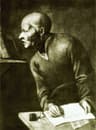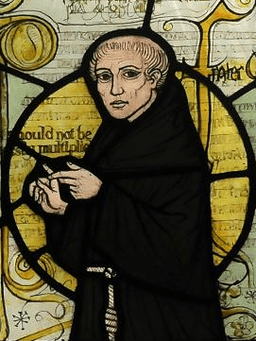
Ockhamlı William
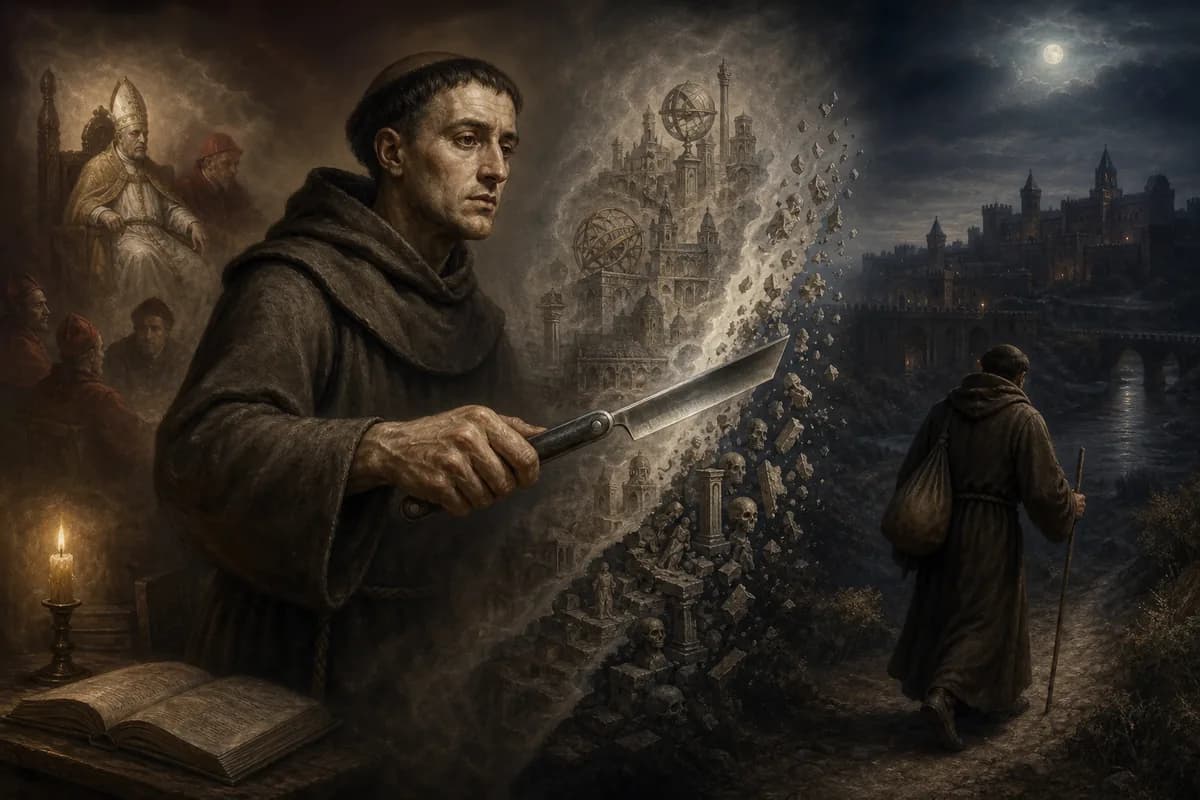
Gereklilik dışında varlıkları çoğaltma. Onun usturası, yüzyılların metafizik aşırılıklarını delip geçti ve modern bilim için zemin hazırladı.
Ockham Oxford'da Fransisken bir rahipti. Sapkınlık suçlamalarıyla Avignon'a çağrıldı, Münih'e kaçtı. Onun adcılığı (nominalizm) modern felsefenin tüm seyrini etkiledi.

Yerler
Fikirler
Sözler
“Varlıklar gereklilikten fazla çoğaltılmamalıdır.”
Eserler
Hayat ve Anlar
Oxford'da öğrenim
Fransisken keşiş olarak Oxford'da teoloji okudu; mantık ve metafizik dersleri dalga yapıyordu.
Avignon'da sapkınlık davası
Sapkınlık suçlamasıyla papalık sarayına çağrıldı; dört yıl soruşturma altında kaldı.
Münih'e kaçış
Gece kaçarak İmparator II. Ludwig'in sarayına sığındı: 'Kılıçla beni koru, kalemle seni korurum.'
Münih'te ölüm
Muhtemelen Kara Veba'da öldü; usturası onu mahkum eden her papa'dan uzun ömürlü oldu.
Etki
Etkilendiği düşünürler
- Duns Scotus
Ockham, Scotus'u dikkatle inceledi ve gereksiz bulduğu araçları, yani biçimsel ayrımı ve ortak doğaları, budadı. Geriye yalnızca bireyler ve onlara verdiğimiz adlar kaldı.
- Thomas Aquinas
Aquinas zihnin şeylerdeki gerçek ortak doğayı kavradığını savunurken, Ockham yalnızca bireylerin var olduğunu ve evrenselliğin yalnızca işaretlere ait olduğunu ileri sürdü, bu ayrılış, geç ortaçağ felsefesini tanımlar.
Etkilediği düşünürler
- Thomas Hobbes
Hobbes'un tümellerin sadece adlardan ibaret olduğu ve akıl yürütmenin sözcüklerle hesap yapmak anlamına geldiği yönündeki ısrarı, Ockham'ın kurduğu nominalist çizgiyi sürdürür, artık teolojik ortamından sıyrılmış bir biçimde.