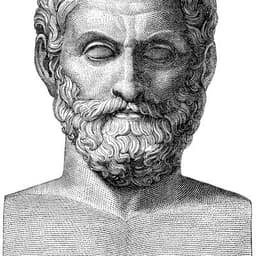
Tales
İlk filozof. Dünya dönüp dururken o durdu ve sordu: her şey neden yapılmış?
Thales'ten önce insanlar selleri tanrılarla, tutulmaları kaderle açıklardı. Thales farklı bir soru sordu: ya dünyanın bir doğası varsa ve bu doğa anlaşılabilirse? Her şeyin kökeninde suyun yattığını öne sürdü, bir mit olarak değil, bir kuram olarak. Anlatıdan sorgulamaya geçiş, felsefenin başladığı an işte budur.

Yerler
Fikirler
Sözler
“Su, her şeyin ilk ilkesidir.”
“Kendini bil.”
Eserler
Tutulma ve Diğer Kehanetler Üzerine
atfedilenThales'in MÖ 585'teki güneş tutulmasını önceden bildirdiği ve piramitlerin yüksekliğini gölgelerinden ölçtüğü söylenir. Herodot ve başkalarının aktardığı bu hikâyeler, onu bilimle felsefenin buluştuğu ilk kişi haline getirir.
Parçalar ve Tanıklıklar
parçalıThales'in yazılı bir eseri günümüze ulaşmamıştır. Bildiklerimiz, onun su, ruh ve tanrı üzerine düşüncelerini aktaran sonraki yazarlardan (Aristoteles, Diogenes Laertios ve diğerleri) gelen parçalardır.
Hayat ve Anlar
Milet'te doğdu
İyonya kıyısındaki Milet'te doğdu; Mısır geometrisi ve Babil astronomisinin her gemiyle geldiği bir liman kentiydi.
Miletos'ta doğdu
Thales, Miletos'ta dünyaya gelir. Burası, Ege tüccarlarıyla Mısırlı tacirlerin kesiştiği hareketli bir İyon limanıdır. Şehir ticaret ve çatışan fikirlerle uğuldar. Thales, ömrünün çoğunu burada, içinden geçen her şeyden beslenerek geçirecektir.
Yurtdışı yolculukları
Sonradan Mısır ve Yakın Doğu'ya gittiği, arazi ölçümü ve gök gözlemi tekniklerini getirdiği anlatılır.
Mısır'da Geometri Öğrenimi
Anlatıldığına göre Thales, Mısır'a gidip rahipleri hayrete düşürür: Piramidin yüksekliğini sadece gölgesinden ölçer. Oradaki geometriyi öğrenip ülkesine getirir, ona yeni bir biçim verir: pratik kurallar listesi değil, sebepler arayışı. Bu ziyaret anlatıldığı gibi olmuş olsun ya da olmasın, onun matematiğinde Mısır'dan bir şeyler yaşar.
Su ilk ilke olarak
Her şeyin sudan geldiğini öne sürdü. Bu mitoloji değil, anlaşılabilir bir doğa iddiasıydı.
Tutulma öngörüsü
Güneş tutulmasını öngördüğü aktarılır. Gerçekten mi gördü yoksa düzeni mi tanıdı, hikâye onu göğü okuyan adam yaptı.
Güneş Tutulmasını Tahmin Eder
MÖ 585'te, gün ortasında güneş kaybolur ve Lidyalılar ile Medler arasındaki bir savaşı durdurur. Thales bunu tahmin etmişti. Ordular tutulmayı bir işaret sayıp barış yaptı. Bunu nasıl yaptığı kesin bilinmiyor (belki Babil tutulma kayıtları, belki kendi hesapları) ama tahmin tutar. Bu, Batı felsefesinin tarihlenebilen en eski olayıdır.
Milet'te ölümü
Doğduğu kentte öldü; Anaksimandros ve Anaksimenes üzerinden sorgu Milet'te kaldı.
Miletos'ta Ölür
Thales, milattan önce 546 yılı civarında, doğduğu kentte ölür. Kendi yazdığı hiçbir eser bırakmaz; günümüze ulaşan yalnızca başkalarının aktardığı alıntılar ve anlatılar, yüzyıllar süren yeniden anlatmaların süzgecinden geçmiştir. Geriye kalan, bir eserler bütününden çok bir ündür: Her şeyin neyden yapıldığını ilk soran ve bunu ciddi bir soru olarak soran ilk insan olduğu söylenir.
Etki
Etkilediği düşünürler
- Pythagoras
Thales genç Pythagoras'ı Mısır'a gitmeye teşvik etmiş olabilir. Miletoslu doğal sorgulama geleneği, Pythagoras'ın matematiksel kosmolojisine zemin hazırladı.
- Anaximander
Anaksimandros, Miletos'ta Thales'in dostu ve halefiydi. Onun şeylerin kaynağı hakkındaki sorusunu daha cesur bir yöne taşıdı.