Explore
Compare
Life
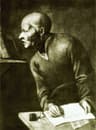
The Subtle Doctor, who argued that being means the same of God and creatures, and that each thing has its own thisness.

Do not multiply entities beyond necessity. His razor cut through centuries of metaphysical overgrowth and cleared the ground for modern science.
Connection
Duns Scotus the subtle doctor pared back William of Ockham — Ockham worked through Scotus closely and cut away what he judged needless machinery, the formal distinction and common natures, leaving only individuals and the names we give them.
Ideas
Words
“Being is said in one and the same sense of God and of creatures, or we could not speak of God at all.”
“Entities must not be multiplied beyond necessity.”
Key Moments
c. 1266 CE
Born in Scotland
c. 1300 CE
Thisness
c. 1302 CE
Lecturing at Paris
1308 CE
Death at Cologne
c. 1309 CE
Studies at Oxford
1324 CE
Summoned to Avignon for Heresy Trial
1328 CE
Flees to Munich
c. 1347 CE
Dies in Munich
Works
Ordinatio
Summa Logicae