A quotation from David Hume
Quotation
A wise man proportions his belief to the evidence.
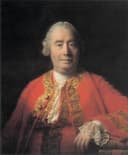
David Hume
The most thoroughgoing skeptic in the history of philosophy. He argued that reason cannot justify itself, causation cannot be proven, and the self is a fiction.
Hume was born in Edinburgh in 1711 and spent his twenties in a frenzy of writing that he later described as nearly driving him mad. The Treatise of Human Nature, published when he was twenty-eight, was the most radical work in the British empirical tradition, taking Locke and Berkeley's principles further than either had dared. He argued that our belief in cause and effect is nothing more than habit, that the self is not a substance but a bundle of passing impressions, and that morality is grounded in sentiment rather than reason. The book fell dead-born from the press, as he later wrote. He spent the rest of his life rewriting the same ideas in more accessible form, working as a librarian and diplomat, writing a bestselling history of England, and becoming the most famous philosopher of his age. He died in 1776, serenely, which his contemporaries found disturbing.
Descartes vs. Hume
Rational Cogito vs. Radical Skeptical Empiricism: Can pure reason prove reality without sensory doubt?
René Descartes sought an unshakable foundation for knowledge by systematically doubting everything until he found the rock-bottom truth: 'I think, therefore I a…
Explore Debate→More Lines from David Hume
More from David Hume→Understanding This Quotation
What does David Hume mean by this quotation?
The most thoroughgoing skeptic in the history of philosophy. He argued that reason cannot justify itself, causation cannot be proven, and the self is a fiction. Hume was born in Edinburgh in 1711 and spent his twenties in a frenzy of writing that he later described as nearly driving him mad. The Treatise of Human Nature, published when he was twenty-eight, was the most radical w…