A quotation from Simone Weil
Quotation
Attention is the rarest and purest form of generosity.
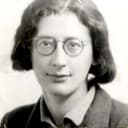
Simone Weil
She left a teaching post to work in a factory, fought briefly in the Spanish Civil War, and restricted her own wartime food intake to match occupied France's rations, treating attention and self-denial as the substance of a genuine spiritual life.
Weil was, by every account, one of the most formidable students of her generation, outscoring Simone de Beauvoir on France's brutally competitive philosophy agrégation exam, and Beauvoir herself later recalled being struck less by the rivalry than by Weil's evident, almost frightening seriousness about the world's suffering. That seriousness was never merely theoretical: she left a secure teaching position to spend roughly a year working in a Renault factory, deliberately taking on the exhausting, mind-numbing labor she wanted to understand from inside rather than merely theorize about from a lecture podium, and later crossed into Spain to join an anarchist militia during its civil war, where she was withdrawn from combat after badly burning herself by stepping into a pot of boiling oil. After fleeing occupied France for London to work with the Free French, she deliberately restricted her own food intake to match the rations of French citizens living under German occupation, a choice that, combined with existing tuberculosis, contributed directly to her early death in an English sanatorium. Her philosophical and spiritual writing, most of it published only after her death from notebooks she left behind, centers on a distinction between gravity, the natural, self-seeking pull that governs nearly all human motivation, and grace, a wholly different force that can only be received, never seized, chiefly through the discipline of what she called attention: a state of receptive, ego-emptied concentration she considered close to the essence of genuine prayer, whether or not the object being attended to was explicitly religious. Despite intense, repeated mystical experiences of Christ's presence that she recorded with total conviction, she deliberately refused baptism and formal membership in the Catholic Church for the rest of her life, arguing that the Church's history of condemning those outside it made membership a betrayal of exactly the excluded and anathematized people she felt most called to stand beside. Albert Camus, working as an editor at Gallimard after the war, personally championed the publication of her surviving notebooks and essays, calling her simply the only great spirit of their time.
More Lines from Simone Weil
More from Simone Weil→Understanding This Quotation
What does Simone Weil mean by this quotation?
She left a teaching post to work in a factory, fought briefly in the Spanish Civil War, and restricted her own wartime food intake to match occupied France's rations, treating attention and self-denial as the substance of a genuine spiritual life. Weil was, by every account, one of the most formidable students of her generation, outscoring Simone de Beauvoir on France's brutally competitive philosophy agrégation exam, and Beauvoir herself later recalled being stru…
What was the context or school of thought behind this idea?
Simone Weil articulated this thought in Gravity and Grace. A posthumous compilation of Weil's notebooks, arranged by Gustave Thibon, built around the distinction between gravity (the natural, self-seeking pull governing most human motivation) and grace, recei…