Christian Mysticism
Key Idea
“The living fire speaks. Those with ears are not the same after.”
Overview & Origins
Hildegard of Bingen heard God and wrote it down in music, natural history, medicine, and visions of extraordinary visual complexity. She combined systematic theology, natural science, music theory, and prophetic authority in a single life. She corrected clergy, challenged popes, and preached through the Rhineland. The tradition she represents insists that truth comes not only by argument but by direct illumination.
Emerging in the 12th century, Christian Mysticism, as embodied by Hildegard of Bingen, represents a profound synthesis of divine revelation and intellectual rigor. Rejecting the notion that truth is accessible solely through rational discourse, this tradition posits that divine illumination—direct, experiential communion with God—offers an equally vital path to wisdom. Hildegard’s visions, meticulously recorded in theological treatises, musical compositions, and scientific works, exemplify this union of the mystical and the systematic. Her authority, derived from prophetic encounters, allowed her to critique ecclesiastical corruption while advancing a holistic worldview where nature, art, and spirituality intertwine. This school’s enduring legacy lies in its challenge to hierarchical knowledge systems, affirming that the divine speaks through multiple mediums—music, nature, and the inner light of the soul—transforming those who listen into vessels of sacred truth.
Core Tenets
Divine Illumination
Truth is revealed not only through reason but through direct, unmediated encounters with the divine.
Unity of Knowledge
The sacred permeates all domains—theology, science, and art—demanding an integrated approach to understanding.
Prophetic Authority
Mystical experience grants the moral and intellectual right to challenge institutional power.
Philosophers of this Tradition

John Scotus Eriugena
The lone genius of the dark centuries, who read Greek when almost no one in the West could, and dared to fold God and creation into a single nature.

Hugh of Saint Victor
He mapped all human knowledge before universities existed and argued the whole map leads, in the end, to God.

Hildegard of Bingen
Mystic, composer, herbalist, abbess. She saw visions of living light and wrote them down in books that no man dared suppress.
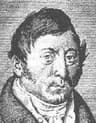
Bonaventure
For him, all knowledge was a ladder, and every rung led the mind a step closer to God.

Meister Eckhart
The Dominican mystic who preached that the ground of the soul and the ground of God are one, and that the deepest prayer is to want nothing.

Nicholas of Cusa
A cardinal who argued that the human mind can never fully grasp the infinite, and that recognizing this limit honestly, a 'learned ignorance', is itself the beginning of real understanding rather than its defeat.
Canonical Works
Eriugena's vast dialogue dividing all reality into a single Nature in four aspects: God as uncreated creator, the eternal causes, the created world, and God again as the end to which all things return. A Neoplatonic system of astonishing boldness, written in an age that could barely read its sources.
A guide to the whole of learning written for the students of Saint-Victor: what to read, in what order, and in what spirit. Hugh maps every art (including, unusually for his century, the mechanical crafts) onto a single program whose end is the restoration of a fallen human nature. Its advice on humble, omnivorous study made it the medieval schoolroom's most loved manual.
Twenty-six visions of the cosmos, humanity, and the divine, dictated over ten years. Hildegard saw the universe as a cosmic egg, animated by living light.
A map of the soul's ascent from the traces of God in the natural world, through the image of God within the mind, to a union that finally outruns thought. For Bonaventure, the point of understanding is not to possess truth but to be drawn toward its source.
Eckhart's vernacular sermons, preached to ordinary listeners and nuns, where his boldest thought lives: the uncreated spark in the ground of the soul, the birth of God within, and a detachment so complete it wills nothing, not even God. Tried for heresy, they were never forgotten.
Argues that the infinite God cannot be grasped by reason's ordinary method of comparison, and that a disciplined recognition of this limit, learned ignorance, brings the mind closer to truth than false certainty, illustrated through mathematical images like a circle of infinite radius becoming a straight line.
Core Ideas & Concepts
Voices & Maxims
“We do not know what God is. God himself does not know what he is, because he is not any thing.”
“Learn everything; you will see afterwards that nothing is superfluous.”
“The whole visible world is like a book written by the finger of God.”
“The soul is a breath of living spirit, that with excellent sensitivity, permeates the entire body to give it life.”