Scholasticism
Key Idea
“Faith seeks understanding. Reason serves, corrects, and sometimes overturns what we think we know.”
Overview & Origins
Medieval Scholasticism was not dogma dressed as reason, it was reason pressed hard against dogma to see what held. Anselm's ontological argument launched a tradition of rigorous proof. Abelard's dialectical method turned contradiction into method. Aquinas reconciled Aristotle and Christian theology in a synthesis so comprehensive it still provides the official philosophy of the Roman Catholic Church. Ockham then dismantled it: entities should not be multiplied beyond necessity.
Emerging in the intellectual ferment of medieval Europe, Scholasticism sought to harmonize faith with reason, transforming theological inquiry into a disciplined, logical enterprise. Originating in cathedral schools and flourishing in universities, it grappled with fundamental questions: Can divine truths be proven by reason? How does human intellect relate to divine revelation? Figures like Anselm of Canterbury framed faith as a starting point for rational exploration, while Aquinas synthesized Aristotelian logic with Christian doctrine, creating a metaphysical framework where nature and grace coexisted. Yet this synthesis was not static—William of Ockham’s razor later pared away unnecessary abstractions, foreshadowing modern empiricism. Scholasticism’s enduring legacy lies in its methodological rigor, shaping not only theology but the very foundations of Western academic tradition.
Core Tenets
Fides Quaerens Intellectum
Faith seeks understanding: revelation initiates inquiry, but reason must clarify and defend theological truths.
Dialectical Resolution
Contradictions between authorities (e.g., Scripture and Aristotle) are resolved through systematic logical analysis, not suppression.
Ontological Parsimony
Ockham’s Razor: explanations should avoid unnecessary complexity, privileging the simplest sufficient account of phenomena.
Philosophers of this Tradition

Anselm
God is that than which nothing greater can be conceived. From this single idea he built the most famous proof of God's existence.

Peter Abelard
The sharpest logician in Paris and the most famous lover. His mind cut through every argument. His heart cost him everything.

Hugh of Saint Victor
He mapped all human knowledge before universities existed and argued the whole map leads, in the end, to God.

John of Salisbury
He wrote the first comprehensive work of medieval political philosophy, and saw his closest friend murdered at an altar.
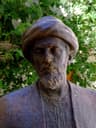
Maimonides
The great Jewish philosopher who tried to reconcile Aristotle with the Torah, and faith with a thinking mind.
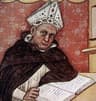
Albertus Magnus
The teacher of Aquinas, who insisted that studying nature carefully was a way of honoring its creator.

Roger Bacon
The Franciscan who insisted that experiment, not authority, settles a question, and sketched flying machines four centuries early.
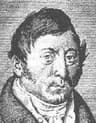
Bonaventure
For him, all knowledge was a ladder, and every rung led the mind a step closer to God.

Thomas Aquinas
He reconciled Aristotle with Christianity and wrote the most systematic theology ever attempted. Then he stopped, saying all he had written was straw.
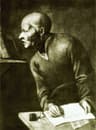
Duns Scotus
The Subtle Doctor, who argued that being means the same of God and creatures, and that each thing has its own thisness.

William of Ockham
Do not multiply entities beyond necessity. His razor cut through centuries of metaphysical overgrowth and cleared the ground for modern science.

Nicholas of Cusa
A cardinal who argued that the human mind can never fully grasp the infinite, and that recognizing this limit honestly, a 'learned ignorance', is itself the beginning of real understanding rather than its defeat.
Canonical Works
Contains the ontological argument: God is that than which nothing greater can be conceived. If such a being exists only in the mind, a greater being (one that also exists in reality) can be conceived. Therefore God must exist.
Abelard places contradictory statements from the Church Fathers side by side on 158 theological questions, forcing readers to reason through the contradictions. The method that launched scholasticism.
A guide to the whole of learning written for the students of Saint-Victor: what to read, in what order, and in what spirit. Hugh maps every art (including, unusually for his century, the mechanical crafts) onto a single program whose end is the restoration of a fallen human nature. Its advice on humble, omnivorous study made it the medieval schoolroom's most loved manual.
The first complete political treatise of the Latin Middle Ages, a statesman's book written by a working diplomat. It anatomizes the court's flatterers and hunters, describes the commonwealth as a body whose feet are the peasants and whose soul is religion, and argues, carefully but unmistakably, that a tyrant who tramples the law may lawfully be resisted.
Written for the believer who has also studied philosophy and feels the two pulling apart. Maimonides reads scripture's human images of God as accommodations to ordinary minds, and approaches the truth by saying what God is not.
A map of the soul's ascent from the traces of God in the natural world, through the image of God within the mind, to a union that finally outruns thought. For Bonaventure, the point of understanding is not to possess truth but to be drawn toward its source.
A study of stones, metals, and their properties, mixing inherited learning with Albert's own observation. It typifies his conviction that the natural world is a second scripture, to be read closely rather than merely quoted from books.
Roger Bacon's encyclopedic appeal to the pope to reform learning around mathematics, optics, languages, and above all experiment. It anticipates the scientific method by insisting that reasoning alone cannot certify a truth, only experience can.
The most ambitious theological work ever written. Three parts, 512 questions, 2,669 articles. Aquinas attempts to organize the entire Christian understanding of God, humanity, and ethics using Aristotelian logic.
Duns Scotus's revised commentary on the Sentences, the fullest statement of his thought. Here he argues that being is said in one sense of God and creatures, gives the will primacy over the intellect, and defines the thisness that makes each thing uniquely itself.
Ockham's major work on logic, where he develops his nominalist position that universals are mental concepts, not real things. The razor cuts here: do not assume the existence of anything unless the evidence requires it.
Argues that the infinite God cannot be grasped by reason's ordinary method of comparison, and that a disciplined recognition of this limit, learned ignorance, brings the mind closer to truth than false certainty, illustrated through mathematical images like a circle of infinite radius becoming a straight line.
Core Ideas & Concepts
Centers of Thought
Voices & Maxims
“I do not seek to understand so that I may believe, but I believe so that I may understand.”
“The beginning of wisdom is found in doubting; by doubting we come to the question, and by seeking we may come upon the truth.”
“Learn everything; you will see afterwards that nothing is superfluous.”
“The whole visible world is like a book written by the finger of God.”