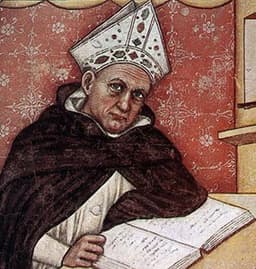
Albertus Magnus
Aquinas'ın hocası; doğayı dikkatle incelemenin yaratıcısına bir ibadet yolu olduğunu öne sürdü.
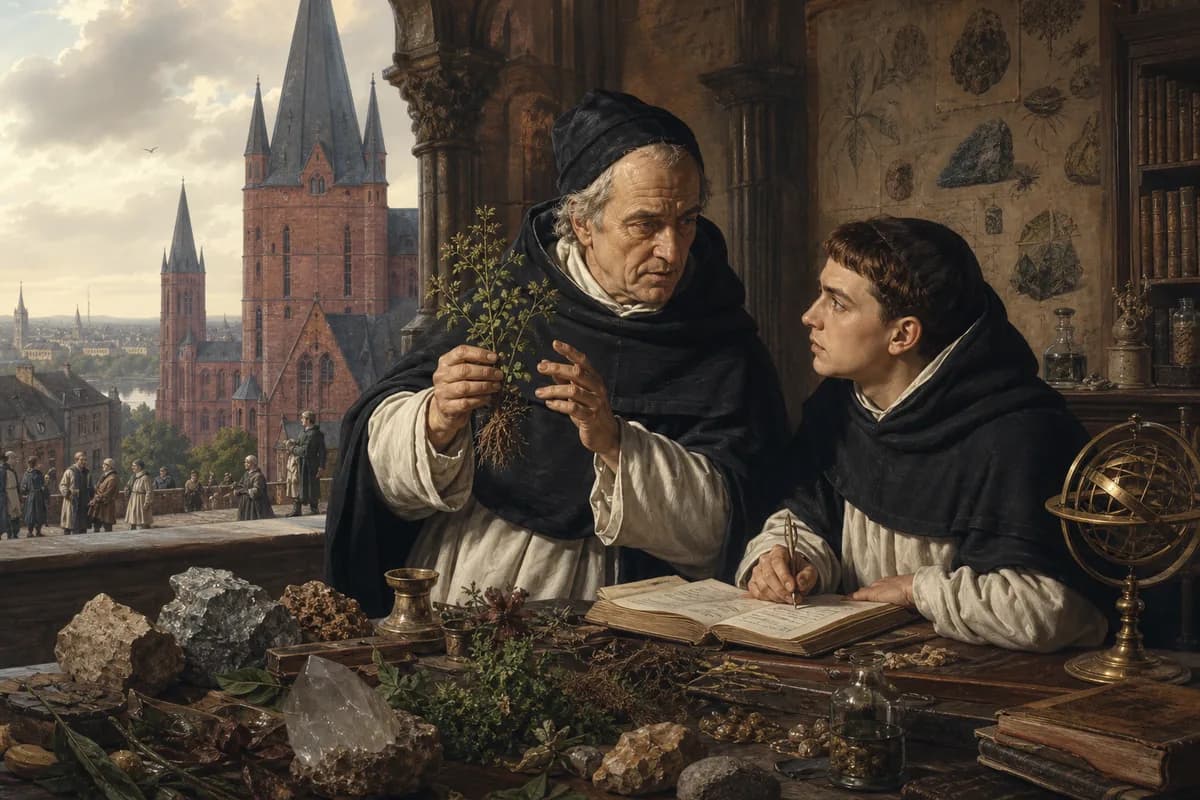
Albert, kendi yaşamında Büyük lakabını kazandı; bilgi genişliği eşsizdi. Paris ve Köln'de ders veren bir Dominiken olan Albert, Latin dünyasına Aristoteles'in tümünü aktarmayı kendine görev edindi ve bu arada çoğu âlim sadece kitap alıntılarken bitkiler, hayvanlar ve mineraller üzerine ilk elden gözlemler yaptı. Doğayı incelemek, ikinci bir kutsal kitabı okumaktır, dedi. En ünlü öğrencisi Thomas Aquinas sentezi ustasının kendisinden daha ileriye taşıdı.

Yerler
Fikirler
Sözler
“Doğa biliminin amacı başkalarının söylediklerini kabul etmek değil, doğadaki etkin nedenleri araştırmaktır.”
Eserler
Hayat ve Anlar
Svabya'da doğdu
Danube kıyısındaki Lauingen'de doğdu; genç yaşta Dominiken tarikatına girdi.
Köln'de öğretim
Köln'de çalışma evi kurdu; genç Thomas Aquinas'ı öğretti ve bitkileri bizzat inceledi.
Aristoteles yorumları
Aristoteles'i Latince dünyaya açtı; doğayı dikkatle incelemenin yaratıcıya saygı olduğunu savundu.
Köln'de ölüm
Köln'de öldü; yaşarken Büyük unvanını kazandı.
Etki
Etkilendiği düşünürler
- Aristotle
Albert, Aristoteles'in bütününü Latin dünyasına sunmayı kendine vazife edindi.
Etkilediği düşünürler
- Thomas Aquinas
Albert, Köln'de Aquinas'a ders verdi ve sessiz öğrencisini bir gün tüm dünyanın duyacağı bir ses olarak savundu.

