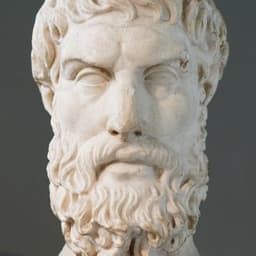
Epicurus
Pleasure is the absence of pain. The good life is quiet, shared, and free from fear.
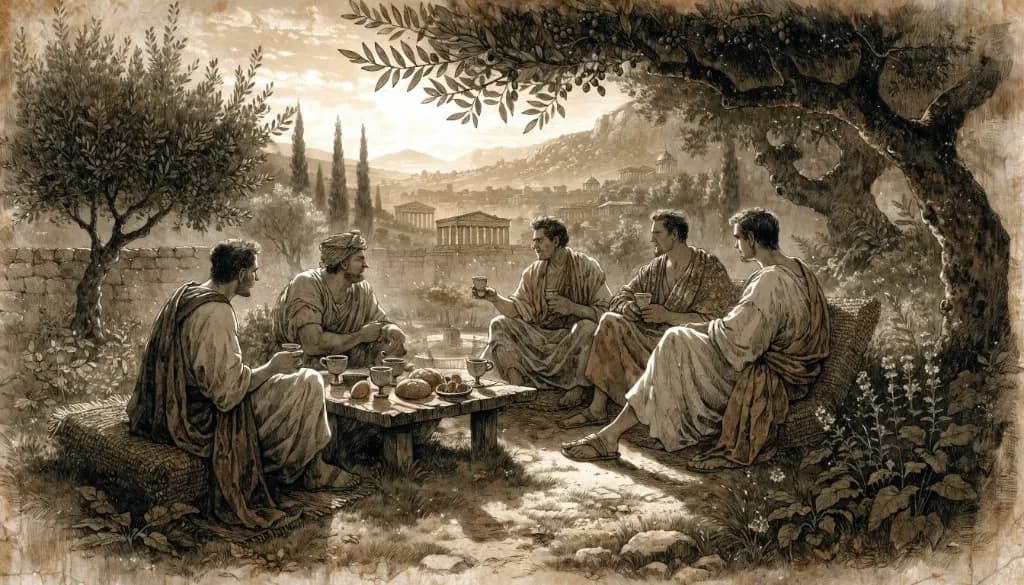
Epicurus built a garden on the edge of Athens and invited friends to live there. His philosophy was gentle: pleasure is good, but the deepest pleasure is freedom from anxiety. Do not fear the gods, they are indifferent. Do not fear death, you will not experience it. Eat simply, love your friends, and think clearly. His school welcomed women and enslaved people, which scandalized Athens. His teachings were distorted for centuries but remain among the most humane in philosophy.

Read in the Library
Places
Ideas
Words
“Do not spoil what you have by desiring what you have not; remember that what you now have was once among the things you only hoped for.”
“Death does not concern us, because as long as we exist, death is not here. And once it does come, we no longer exist.”
Works
The Dialogues and Discourses
lostDiogenes Laertius preserves a catalogue of Aristippus' books (dialogues, a history of Libya, an essay on education) and then reports, in the same passage, that some authorities claimed he wrote nothing at all. Not one of the titles survives.
Letter to Menoeceus
A concise summary of Epicurean ethics. Addresses the fear of death, the nature of pleasure, and the path to a tranquil life. One of the few surviving complete texts by Epicurus.
Principal Doctrines
Forty short maxims summarizing core Epicurean teachings on pleasure, justice, friendship, and the gods.
Life & Moments
Born on Samos
Born on Samos to Athenian colonists. His father was a schoolteacher. Epicurus later said he turned to philosophy at age fourteen, dissatisfied with his teachers’ inability to explain chaos.
The Garden
Epicurus purchased a garden on the outskirts of Athens and established his school there. It was radical: women and enslaved people were welcome. The community lived simply, ate together, and practiced the quiet contentment Epicurus taught.
Atoms and Tranquility
Epicurus adapted Democritean atomism to ethical ends: if gods do not meddle and souls do not survive death, fear loses its grip.
Letters to Friends
Epicurus wrote letters summarizing his teaching for distant students. The Letter to Menoeceus remains one of philosophy's gentlest introductions to how to live.
Death in the Garden
Epicurus died of kidney stones after two weeks of agony. His last letter, written to a friend, described the day as happy despite the pain. He left his garden and his library to his followers, ensuring the school’s survival.
Influence
Influenced by
- Democritus
Epicurus built his physics on Democritus’ atomism, adding the famous ‘swerve’ to allow for free will. He admired Democritus more than any other predecessor.
- Aristippus of Cyrene
Epicurus inherited the Cyrenaic claim that pleasure is the highest good but reworked it away from Aristippus's immediate, sensory hedonism toward long-term tranquility and the absence of pain, a shift the Cyrenaics themselves considered a retreat from the honesty of their position.
- Leucippus
Epicurus built his physics on the atoms and void Leucippus first proposed, adding the swerve to make room for freedom in a world otherwise governed by collision.
Influenced
- Lucretius
Lucretius regarded Epicurus as a liberator of humanity. De Rerum Natura is a poetic monument to Epicurean physics.
- Margaret Cavendish
Cavendish's first book set out an atomist natural philosophy in rhyming couplets, taking the Epicurean picture of a world of small bodies and adapting it before she abandoned atoms for a matter that thinks throughout.
Engage with Epicurus
Explore structured paths, classic debates, and thought experiments featuring this thinker.
Foundations of Ethics: What is the Good Life?
Travel across 2,500 years of ethical philosophy to understand how humanity's greatest minds defined duty, virtue, happiness, and moral duty.
Epicurus vs. Zeno of Citium
Tranquil Pleasure (Ataraxia) vs. Stoic Duty (Logos): How to achieve tranquility in an uncertain world?
Nozick's Experience Machine
Do we value experiencing things subjectively, or do we have a fundamental desire to actually BE and DO things in objective reality?


