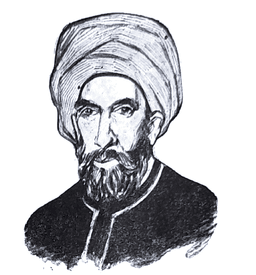
Ibn Tufayl
He wrote the first philosophical novel. A child raised by a gazelle on a deserted island discovers God through reason alone.
Ibn Tufayl served as court physician in Marrakesh. His single surviving work, Hayy ibn Yaqzan, tells the story of a boy raised alone on an island who discovers natural philosophy, metaphysics, and mystical union with God through observation and reason. When he meets people from a nearby island who follow a revealed religion, he finds their beliefs are the same truths he discovered, expressed in images for those who cannot reason abstractly. The book was translated into Latin in 1671 and influenced Locke and Defoe.


Places
Ideas
Words
“He saw that the whole universe was, in truth, one great being.”
“He learned that naked truth is not for the many, whose safety lies in the plain sense of the law.”
Works
Life & Moments
Born in al-Andalus
Born in Muslim Spain during the Almohad period. He would serve courts as physician and write one of philosophy's first novels.
Court Physician in Marrakesh
Served as personal physician to the Almohad caliph Abu Yaqub Yusuf in Marrakesh. The position gave him security and time to think, and it gave him influence over who else the caliph met.
Introducing Ibn Rushd to the Caliph
Growing old and looking for a successor, Ibn Tufayl introduced the young Ibn Rushd to Caliph Abu Yaqub Yusuf. The meeting led to Ibn Rushd's commission to comment on Aristotle. One philosopher's retirement launched another's career.
Hayy ibn Yaqzan
Wrote Hayy ibn Yaqzan, the story of a child raised alone on a desert island who discovers the truths of philosophy and religion through reason alone. It is one of the earliest philosophical novels, and it influenced Defoe's Robinson Crusoe centuries later.
Death in Marrakesh
Died in Marrakesh after decades at court. His island tale of Hayy would outlive every office he held.
Influence
Influenced by
- Ibn Bajja
Ibn Tufayl explicitly discussed Ibn Bajja's ideas in the introduction to Hayy ibn Yaqzan.
Influenced
- Ibn Rushd
Ibn Tufayl introduced Ibn Rushd to the Almohad caliph who commissioned the Aristotle commentaries.

