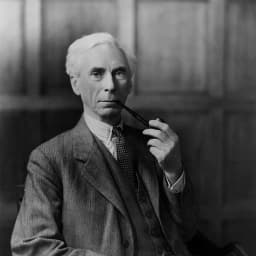
Bertrand Russell
Kariyerinin ilk yarısında analitik felsefeyi icat edip ikinci yarısında hükümetleri kızdırdı. İki uğraşı da uzun sürdü.
Russell kariyerinin ilk yarısında analitik felsefeyi icat etti, ikinci yarısında hükümetleri kızdırdı. Whitehead'le on yılda yazdığı Principia Mathematica, tüm matematiği mantıktan türetmeyi denedi. Betimlemeler kuramı, dilin bizi isimlerin her zaman var olan şeyleri gösterdiğine nasıl yanıltabileceğini gösterdi. Birinci Dünya Savaşı'nda pasifizm nedeniyle hapsedildi, Cambridge'deki görevinden alındı, Nobel Edebiyat Ödülü'nü kazandı, ilerici bir okul kurdu, nükleer silahlara karşı kampanya yürüttü, Einstein'la mektuplaştı ve BBC'de Tanrı'nın varlığını tartıştı. Viktorya döneminden 1960'lara kadar aklın ve bireysel özgürlüğün savunucusu olarak kaldı, hiçbir döneme tam olarak sığmadı. Doksan yedi yaşına kadar yaşadı, defalarca fikrini değiştirdi ve her seferinde kanıtlara güvendi. Frege'nin sistemindeki paradoksu keşfini nazik bir mektupla bildirdi, Frege bu mektubu kitabının yayımlanmasının arifesinde aldı.

Yerler
Fikirler
Sözler
“İyi bir yaşam, sevginin ilham verdiği ve bilginin yol gösterdiği bir yaşamdır.”
“Hayatıma yön veren üç tutku oldu: aşk özlemi, bilgi arayışı ve insanlığın çektiği acılara dayanılmaz bir merhamet. Bunlar basit ama son derece güçlü tutkulardı.”
Eserler
Hayat ve Anlar
Principia Mathematica, Whitehead ile
Russell ve Alfred North Whitehead, on yıl boyunca Principia Mathematica'yı yazdı; 1910-1913 arasında üç cilt olarak yayımlandı. Amaç, tüm matematiği mantıksal aksiyomlardan türetmekti. Russell, bu çalışmanın aklını neredeyse tükettiğini söyledi. Proje, nihayetinde 1931'de Gödel'in eksiklik teoremleriyle sarsıldı.
Barış Karşıtı Eylem Nedeniyle Hapsedilme
Russell, Birinci Dünya Savaşı'nı alenen ve ısrarla karşı çıktı. 1918'de, Amerikan askerlerinin İngiliz grevlerini kırmak için kullanılacağını yazdığı için Brixton Hapishanesi'nde altı ay hapis yattı. Hapis süresini okuyarak ve yazarak geçirdi, matematik felsefesi üzerine bir çalışmayı tamamladı. Hiçbir pişmanlık duymadı.
Russell-Einstein Nükleer Silahsızlanma Manifestosu
Temmuz 1955'te Russell ve Einstein, dünya uluslarını anlaşmazlıklarını barışçıl yollarla çözmeye ve nükleer savaş riskinden kaçınmaya çağıran bir manifesto yayımladı. Bu, Einstein'ın son kamu eylemlerinden biriydi; manifestoyu ölümünden iki hafta önce imzaladı. Manifesto, doğrudan bilim ve dünya işleri üzerine Pugwash Konferansları'na yol açtı.
Etki
Etkilendiği düşünürler
- Gottlob Frege
Russell, Frege'nin 1900'de yayımladığı Begrıffsschrift'ini keşfetti ve onu Aristoteles'ten beri mantık alanındaki en önemli çalışma olarak değerlendirdi. Ardından Frege'ye, Temel Yasalar'ı çökerten paradoksu anlatan mektubu gönderdi.
Etkilediği düşünürler
- Ludwig Wittgenstein
Russell, Wittgenstein'ın dehasını Cambridge'de daha ilk karşılaşmalarında fark etti ve Tractatus'u İngilizce konuşan dünyaya tanıttı. Ancak daha sonra Wittgenstein'ın gittiği yönü takip edemedi.
- A.N. Whitehead
Russell ile Whitehead on yılı aşkın bir süre boyunca Principia Mathematica’yı birlikte yazdı; tüm matematiği mantıktan türetmeyi denediler. Bu ortaklık, Whitehead’ın matematikten metafiziğe yöneldikten sonra bile titiz yaklaşımını şekillendirdi.
- W.V.O. Quine
Quine, Russell ile Whitehead'in Principia Mathematica'da kurduğu mantıkçı program içinde eğitildi ve başlangıçta bu programda çalıştı; olgunluk dönemi yapıtıysa, o programın dayandığı bazı ayrımlara kuşkuyla yaklaştı.
Bertrand Russell ile Felsefe Yapın
Bu düşünürün yer aldığı rehberli yollar, münazaralar ve zihin deneyleriyle fikirleri derinleştirin.
Wittgenstein ve Russell
Dilin Sınırları ve Mistik Sessizlik ile Mantıksal Atomizm ve Bilimsel Akıl.


