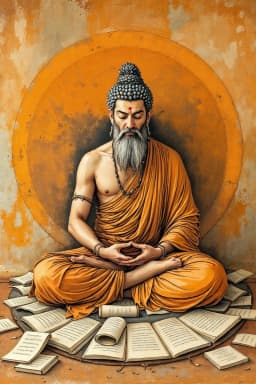
Vasubandhu
Erken Budist düşüncesinin tümünü haritalayan, sonra gördüğümüz dünyanın yalnızca zihin olduğunu savunmak için karşıya geçen usta.
Vasubandhu önce Abhidharmakośa'yı yazdı; Budist zihin ve madde çözümlemesinin tümünü iç içe geçmiş listelere sistemleştiren büyük derleme. Sonra kardeşi Asanga tarafından döndürülerek Yogacara okuluna geçti ve daha tuhaf bir şey savundu: dış dünya bilincin bir kurgusudur, bir rüyadaki nesnelerin gerçek göründüğü gibi gerçek görünür. Otuz özlü mısrada, zihnin kendi tohumlarından olgunlaşarak sonradan katı sandığı dünyayı nasıl yansıttığını ortaya koydu.

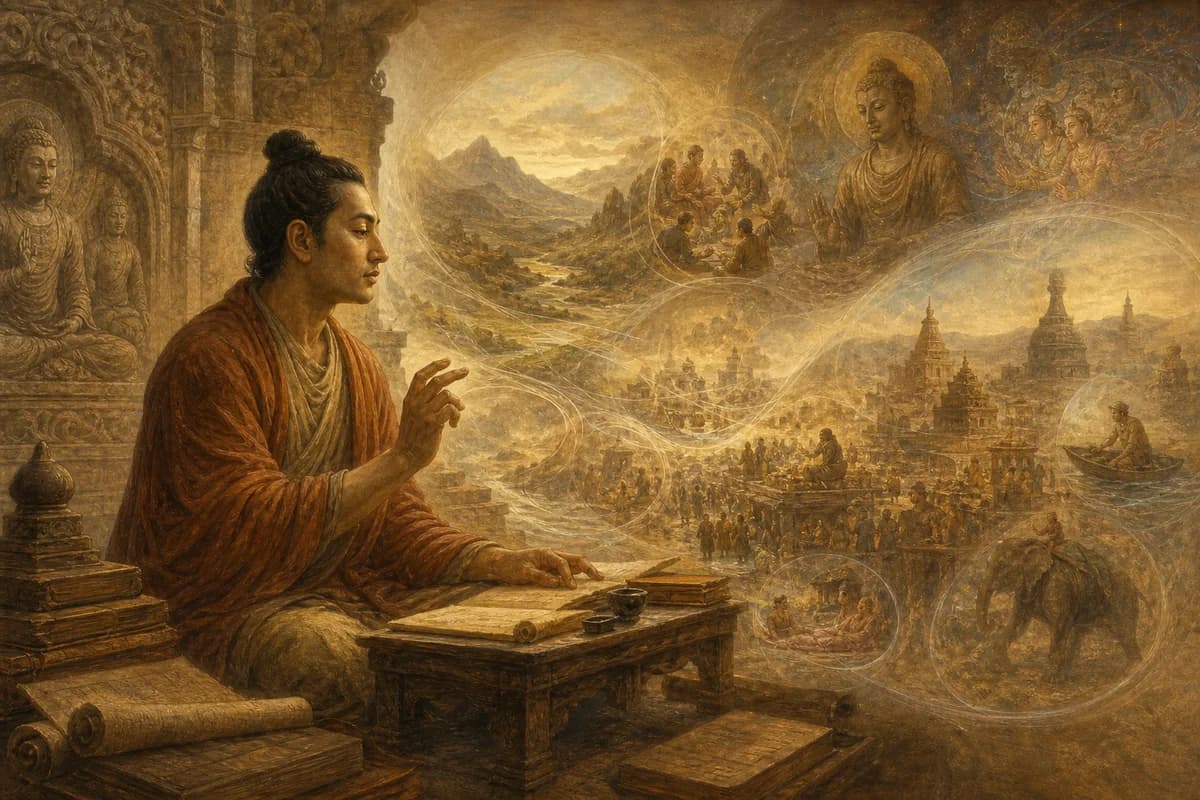
Yerler
Fikirler
Sözler
“Bunların hepsi bilinçtir yalnızca, çünkü dünya bir rüyanın nesneleri gibi görünür.”
Eserler
Hayat ve Anlar
Gandhara'da doğdu
Yunan ve Hint düşüncesinin buluştuğu kuzeybatıda doğdu; Budist zihni ansiklopedik kesinlikle haritalayacaktı.
Abhidharmakosha
Budist zihin ve madde analizini sistemleştiren büyük özet.
Yalnızca zihne dönüş
Kardeşi Asanga'nın etkisiyle Yogacara'ya geçti; dış dünyanın yalnızca bilinç olduğunu savundu.
Bilinç üzerine yirmi dize
Dışarıda görünenin zihnin projeksiyonu olduğunu savundu; rüya gerçekmiş gibi gerçek.
Etki
Etkilendiği düşünürler
- Nagarjuna
Vasubandhu'nun Yogacara'sı, Nagarjuna'nın kurduğu Madhyamaka geleneğiyle birlikte şekillendi; bu iki büyük kanat, Mahayana düşüncesini oluşturur.
Etkilediği düşünürler
- Dignaga
Dignāga, Vasubandhu'nun öğrencisiydi ve Yogaçara'nın zihin çözümlemesini mantık ve bilgi kuramına yöneltti.

