Journey/

G.W.F. Hegel

Idealist
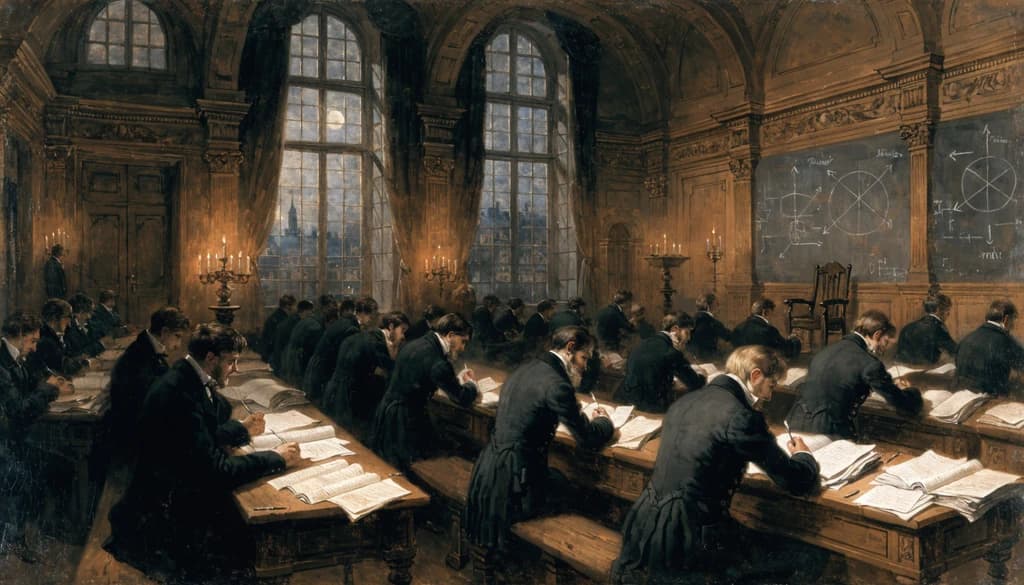
A grand Berlin lecture hall at night, students in dark coats bent over manuscripts by candlelight, Hegelian diagrams on a blackboard.
The real is rational.
1/3

Hegel is the thinker you must pass through to get to almost everything that follows him. His Phenomenology of Spirit describes consciousness's long journey toward knowing itself (through self-certainty, through other people, through history) until it reaches the knowledge that mind and world are one. His Logic is stranger: an attempt to show that pure thought, followed to its own end, generates all the categories of reality. His Philosophy of Right gives us the modern theory of the state, civil society, and the institutions that connect individual freedom to collective life. He is difficult, partly by nature and partly by design. Kierkegaard attacked him for making individual existence abstract. Marx turned him upside down. Nietzsche dismissed him. All three needed him to do it. He remains the pivot of modern thought: the thinker who tried to say everything at once, and nearly managed it.

Writing
October 1806·Jena

Phenomenology finished as Napoleon enters Jena

Hegel completed the Phenomenology of Spirit on the eve of the Battle of Jena in 1806, reportedly writing the final pages while cannon fire sounded outside his window. He glimpsed Napoleon crossing the city the next morning and wrote to a friend that he had seen the World-Soul on horseback.

Words

“The owl of Minerva spreads its wings only with the falling of the dusk.”