
Gazzâlî
İslam dünyasının en prestijli öğretim görevini elinde tutuyordu, sonra terk etti. Felsefe onu yüzüstü bırakmıştı. Yalnızca Allah'ı doğrudan tecrübe etmek yeterli olacaktı.
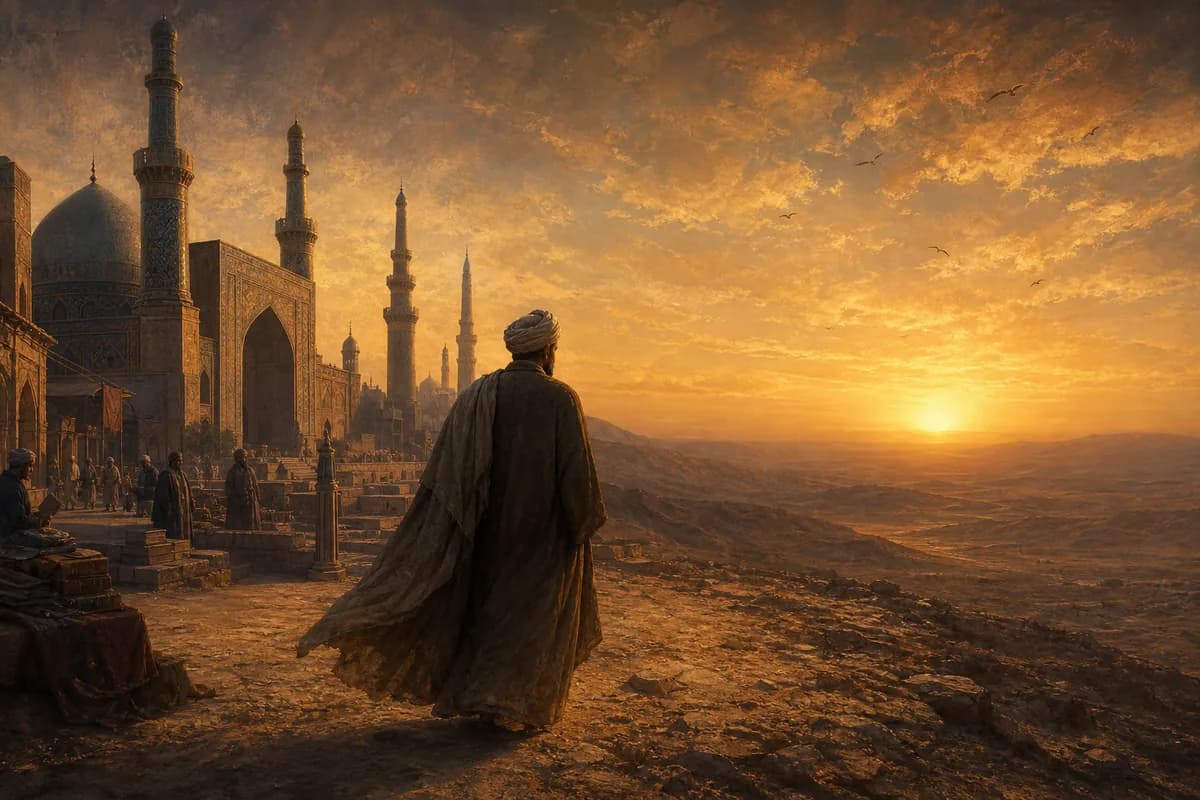
El-Gazali, Bağdat'taki en ünlü alimken, konuşamayacak ve yemek yiyemeyecek kadar şiddetli bir buhrana girdi. İstifa etti, mal varlığını dağıttı ve yıllarını bir Sufi mistiği olarak geçirdi. Filozofların Tutarsızlığı adlı eseri, İbn Sina ve El-Farabi'nin yöntemlerine saldırdı. Din Bilimlerinin Yeniden Dirilişi, İslam düşüncesini içsel tecrübe üzerine yeniden inşa etti.

Yerler
Fikirler
Sözler
“Bilgiyle eyleme geçilmezse bilgi gösteriş, eylem bilgiyle yapılmazsa eylem çılgınlıktır.”
Eserler
Hayat ve Anlar
Nizamiyye medresesi
Bağdat'taki Nizamiyye'de baş öğretmen oldu; kelam ve felsefede en yüksek makama ulaştı.
Kriz
Dilini felç oldu; şöhret ve güven boş geldi; tasavvufa çekildi.
Filozofların Tutarsızlığı
İbn Sina ve Farabi'nin metafiziğini yıktı; felsefenin Allah'ın sırlarına yetmediğini gösterdi.
Tus'ta ölüm
Tus'ta öldü; Sünni düşüncenin en etkili seslerinden biri olarak kaldı.
Etki
Etkilendiği düşünürler
- Ibn Sina
Gazali'nin Filozofların Tutarsızlığı adlı eseri, temelde İbn Sina'nın metafiziğine yönelikti.
- Al-Ash'ari
Gazzâlî, Eş‘arî’nin kurduğu Eş‘arî kelâmı içinde çalıştı ve bu geleneği doruk noktasına taşıdı.
Etkilediği düşünürler
- Ibn Rushd
İbn Rüşd, Tutarsızlığın Tutarsızlığı'nı Gazzâlî'ye doğrudan yanıt olarak yazdı.
- Fakhr al-Din al-Razi
Fahreddin er-Râzî, Gazzâlî'nin filozoflarla kendi sahalarında karşılaşma yöntemini miras aldı: onların argümanlarına tam anlamıyla hâkim olup aşırı gittikleri noktaları göstermek.
- Ibn Arabi
Gazali, en derin bilginin kanıtlanmaktan çok tadıldığını öne sürerek, İbn Arabi'nin vizyoner deneyime dayalı bir metafizik inşa etmesinin önünü açtı ve bu arada sırf bu yüzden göz ardı edilmesini de engelledi.
- Ibn Khaldun
İbn Haldun, Gazzali'nin metafiziğin haddini aştığı inancını paylaştı ama bundan farklı bir ders çıkardı: akıl vahye boyun eğmek yerine, elde kanıt bulunan tarihe yönelmeliydi.


