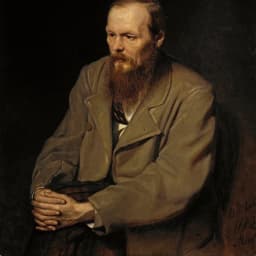
Fyodor Dostoyevsky
He stood before a firing squad, survived, and came back to write the books that asked whether God exists, whether murder can be justified, and whether suffering has meaning.
Dostoyevsky was twenty-seven when tsarist police arrested him for belonging to a socialist literary circle. In December 1849 he was led before a firing squad. At the last moment a messenger arrived with a pardon, it was a calculated imperial lesson in mercy. He served four years of hard labor in Siberia, in conditions of extreme cold and degradation, chained beside common criminals. He came back Orthodox, politically conservative, and in possession of an understanding of human darkness that no other novelist has surpassed. Crime and Punishment is a study of a mind that has reasoned its way to murder, and must live with what reason leaves out. The Idiot asks whether pure goodness is possible in a fallen world. The Brothers Karamazov contains the Grand Inquisitor, who tells Christ that if he came back he would be burned, because humanity cannot bear freedom. Dostoyevsky put the strongest possible arguments against faith into characters of total persuasive power, then tested those arguments against what they cost. He died two months after finishing The Brothers Karamazov. He had used everything.

Read in the Library
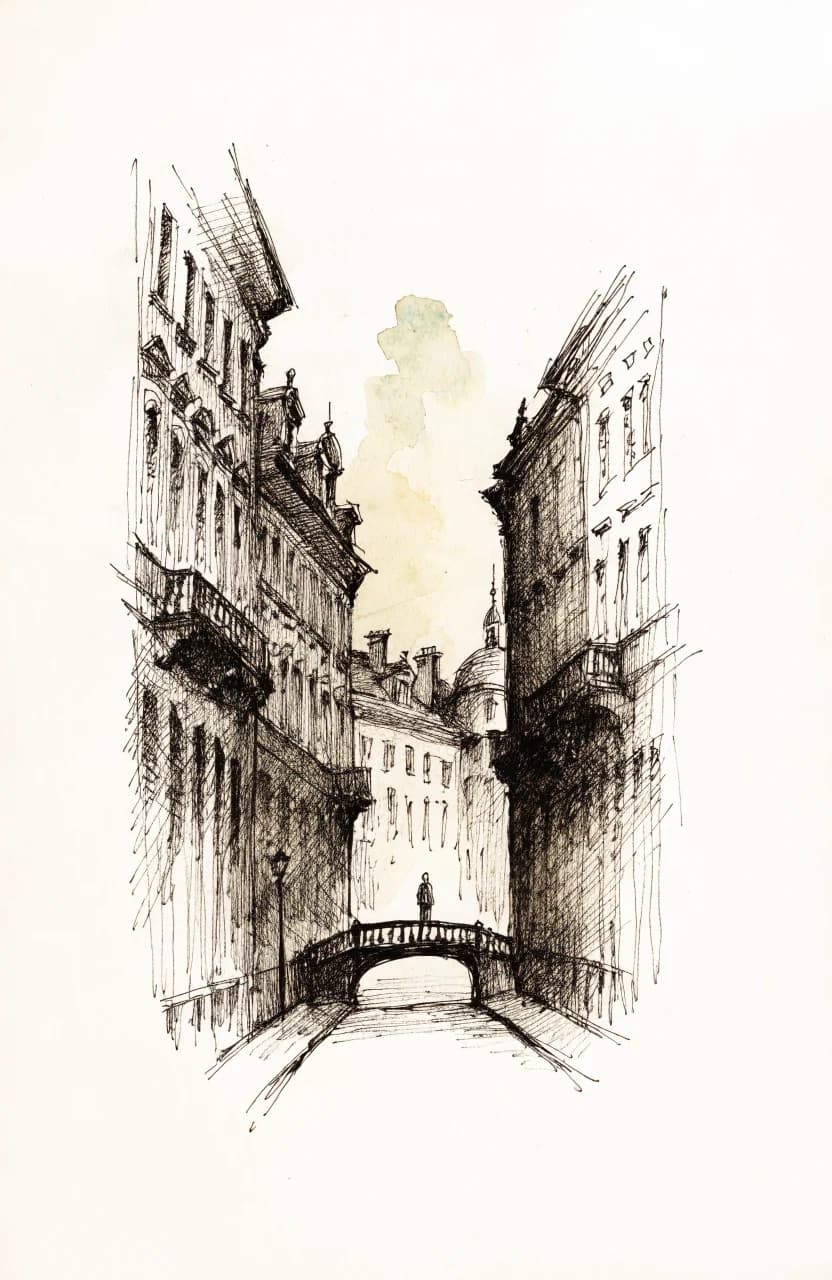
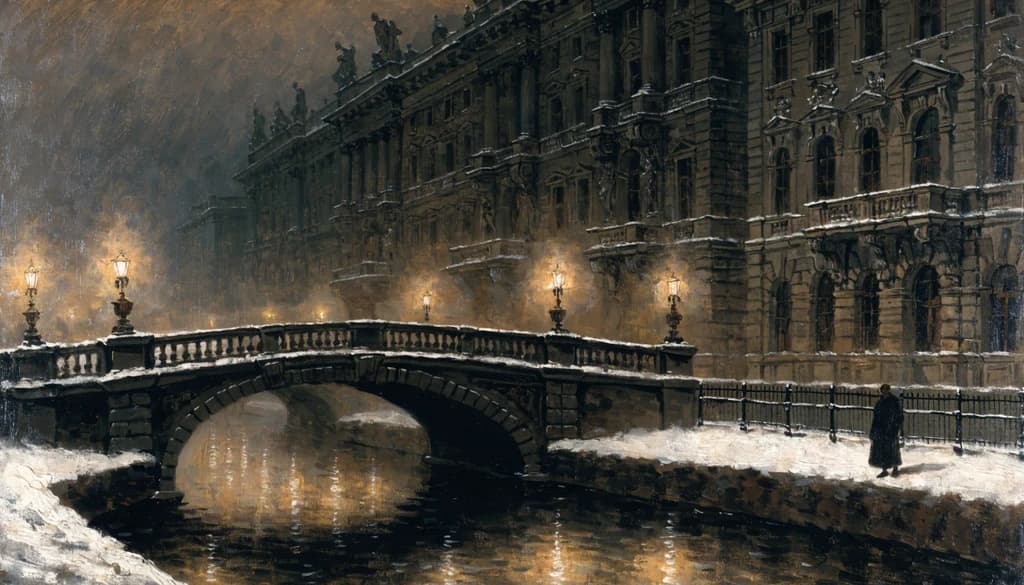
Places
Ideas
Words
“Pain and suffering are always inevitable for a large intelligence and a deep heart.”
“The degree of civilization in a society can be judged by entering its prisons.”
“Above all, don't lie to yourself. The man who lies to himself and listens to his own lie comes to a point that he cannot distinguish the truth within him, or around him, and so loses all respect for himself and for others.”
Works
Crime and Punishment
A student in St. Petersburg reasons himself into believing he may be a Napoleon, one of those rare individuals above ordinary moral law, and murders a pawnbroker to test the theory. What follows is not a detective story but a psychological study of what reason cannot account for: conscience, suffering, and the need for confession. Dostoyevsky's most widely read novel.
The Brothers Karamazov
Dostoyevsky's last and greatest novel: a murder mystery, a family drama, a theological debate, and a portrait of Russia at a turning point. The Grand Inquisitor chapter, in which Ivan imagines Christ's return to sixteenth-century Seville and his arrest by the Church, is the most powerful argument against faith ever written, placed in a novel that refuses to leave it unanswered.
Life & Moments
Arrest and mock execution
In April 1849, Dostoyevsky was arrested for belonging to the Petrashevsky Circle, a liberal literary group that discussed socialist utopias and censorship of the press. In December he was led before a firing squad in St. Petersburg's Semyonov Square, his sentence read aloud, then a messenger arrived with a pardon. The mock execution, designed as a lesson in imperial mercy, left permanent marks. He called those minutes before the expected death the most intense of his life.
Four years in Siberian labor camp
Dostoyevsky spent four years at the Omsk labor camp in Siberia, doing heavy manual work in conditions of extreme cold, chained to other prisoners. He was not allowed to read or write. He later wrote that this period shattered his previous socialism and brought him to a profound Christianity: not the institutional kind, but a direct encounter with the suffering of human beings and the question of whether it has meaning.
The Brothers Karamazov published
Dostoyevsky published The Brothers Karamazov in 1880, his last and largest novel. It contains, in Ivan Karamazov's 'Grand Inquisitor' chapter, what many critics regard as the most powerful literary argument against Christianity ever written, placed inside a novel that cannot be reduced to that argument's conclusion. Dostoyevsky died in January 1881, two months after the final installment appeared.
Influence
Influenced
- Friedrich Nietzsche
Nietzsche called Dostoyevsky the only psychologist from whom he had learned anything: 'the greatest psychologist of all time.' Notes from Underground's underground man, who asserts his freedom by refusing all rational calculation, prefigures Nietzsche's critique of utilitarian morality.
- Jean-Paul Sartre
Sartre placed Dostoyevsky alongside Kierkegaard as a precursor of existentialism. The underground man's assertion that two plus two may equal five, that human freedom exceeds rational determination, anticipates Sartre's own account of consciousness as that which is not what it is.

