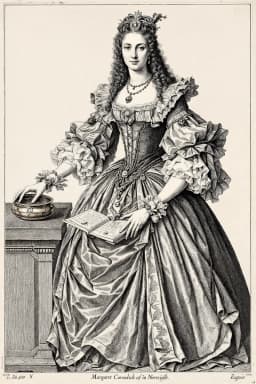
Margaret Cavendish
Tüm maddenin düşündüğünü savunan ve bunu söylemek için tümü erkek olan Kraliyet Cemiyeti'ne dalan düşes, oyun yazarı ve doğa filozofu.
Margaret Cavendish, kadınların hiçbir şey yayımlamaması beklenirken kendi adıyla felsefe, şiir, oyun ve ilk bilimkurgu eserlerinden birini yayımladı. Descartes ve Hobbes'un mekanik felsefesine karşı, maddenin dışarıdan itilen ölü bir madde değil, kendisi canlı, kendiliğinden hareket eden ve bilen olduğunu; doğanın baştan sona akıllı ve duyarlı tek bir düşünen beden olduğunu savundu. 1667'de Kraliyet Cemiyeti'nin bir toplantısına davet edilen ilk kadın oldu; bu olay Londra'yı skandala boğdu.

Yerler
Fikirler
Sözler
“Doğada canlı olmayan, duygu ve akıldan yoksun hiçbir parça yoktur.”
Eserler
Hayat ve Anlar
İngiltere'de doğdu
İç savaşta sürgüne kaçtı; felsefesi orada şekillendi.
Canlı madde
Ölü mekanik maddeye karşı: doğa her yerde canlı, kendi kendine hareket eden ve bilen.
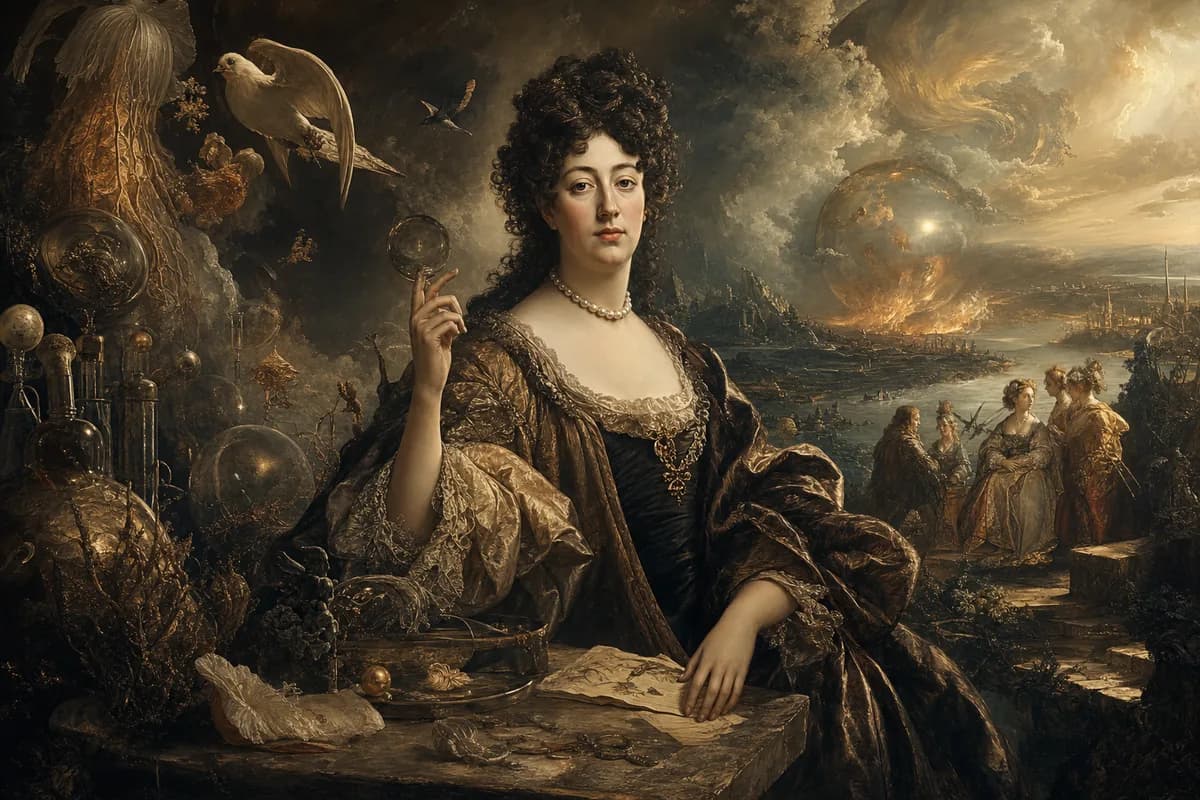
Alevli Dünya
Kendi adıyla bilimkurgunun erken örneklerinden birini yayınladı.
Kraliyet Cumhuriyeti ziyareti
Kraliyet Cumhuriyeti toplantısına davet edilen ilk kadın oldu; Londra skandal oldu.
Etki
Etkilendiği düşünürler
- Descartes
Cavendish, Descartes ve Hobbes'un ölü mekanik madde anlayışını reddetmiş; doğanın her yanıyla canlı ve bilinçli olduğunu savunmuştur.
- Thomas Hobbes
Cavendish, kocasının sürgünde bulunduğu Newcastle çevresi sayesinde Hobbes'u tanıdı. Onun doğa felsefesi de Hobbes gibi materyalistti; ancak Cavendish maddeye, onun vermeyeceği bir şekilde, kendini bilen ve kendi kendine hareket eden bir nitelik verdi.
- Epicurus
Cavendish'in ilk kitabı, Epikürcü küçük cisimler evreni resmini alıp uyarlayarak kafiyeli beyitlerle atomcu bir doğa felsefesi ortaya koydu. Sonra atomları terk edip her yerde düşünen bir maddeye yöneldi.


