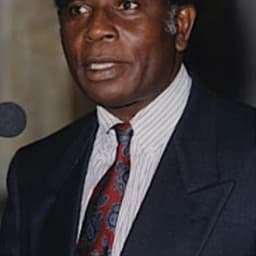
Kwasi Wiredu
He argued that African philosophy could only become fully itself once it stopped explaining ideas in the borrowed vocabulary of English and started thinking directly in African languages.
Wiredu trained in analytic philosophy at Oxford, learning its tools of careful argument and conceptual clarity, then turned those same tools back on the discipline that had trained him. His central complaint was conceptual: much of what passed for African philosophy, he argued, was really African folk belief dressed up in English or French philosophical categories that quietly imported assumptions about mind, God, and causation that African languages did not actually share. He pointed to his own Akan language, Twi, which has no exact equivalent for the Western mind-body split that Descartes made central to European philosophy, and asked what philosophical work might look like if it started from Akan concepts rather than translating them awkwardly into imported ones. This was not nostalgia for a precolonial past; Wiredu was equally sharp criticizing traditional beliefs he thought did not survive rational scrutiny, arguing that reason, not cultural loyalty, was the proper test for any idea regardless of its origin. He proposed consensus-based democracy, modeled loosely on precolonial Akan governance practices of extended deliberation until agreement was reached, as a genuine alternative to adversarial party politics rather than a symbolic gesture toward tradition. He taught for decades at the University of Ghana and later in the United States, training a generation of African philosophers to treat their own languages as sites of serious philosophical work rather than obstacles to it.

Places
Ideas
Words
“Philosophy always operates against the background of a given conceptual framework, which itself is not, in the main, the product of philosophical reflection.”
“The idea that African modes of thought are essentially mystical rather than rational is one of the most fundamental confusions in the study of African philosophy.”
Works
Life & Moments
Begins teaching philosophy at the University of Ghana
After training in analytic philosophy at Oxford, Wiredu returned to teach for over two decades at the University of Ghana, turning the tools of careful conceptual argument back on the discipline that had trained him.
Publishes Cultural Universals and Particulars
Wiredu argued that some philosophical concepts are genuinely universal across cultures while others are culturally particular, using his own Akan language as a sustained case study against uncritical translation of African ideas into Western categories.
Influence
Influenced by
- Ludwig Wittgenstein
Wiredu learned the analytic habit of asking what a word actually does, then applied it to Twi and found that some standing problems of European philosophy do not survive the translation.
- John Dewey
Wiredu drew on pragmatism's suspicion of questions that make no practical difference, using it to argue that African philosophy should neither imitate Europe nor simply catalogue tradition.
Influenced
- Kwame Anthony Appiah
Wiredu and Appiah, both shaped by Ghana and by Oxford-trained analytic philosophy, share a central concern with what it means to do philosophy from an African perspective without either romanticizing tradition or simply importing Western categories wholesale.


