Diogenes
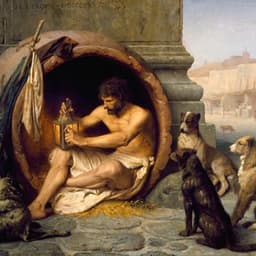
Bir küpün içinde yaşadı, gelenekleri alayla karşıladı ve elinde fenerle dürüstçe bir insan aradı.
Diogenes felsefeyi ders salonundan sokağa taşıdı. Büyük bir seramik küpün içinde uyudu, neredeyse hiçbir şeye sahip olmadı ve Büyük İskender'in karşısında gözünü kırpmadı. Felsefesi radikal bir sadelikti: âdeti, konumu ve rahatlığı soyun, geriye özgür bir insan kalır. Onu izleyen Kinikler, erdemin doğaya göre yaşamak olduğuna ve uygarlığın çoğunun bundan bir dikkat dağıtma olduğuna inandılar.

Yerler
Fikirler
Sözler
“Ben dünya vatandaşıyım.”
“Deli olan ben değilim; sadece başım sizinkinden farklı çalışıyor.”
Eserler
Anekdotlar ve Sözler
atfedilenDiogenes'in yazılı bir eseri günümüze ulaşmamıştır. Felsefesi, Diogenes Laertius, Plutarkhos ve diğerlerinin aktardığı özgürlük, toplum provokasyonu ve yıkıcı zeka dolu hikâyelerde yaşar.
Diogenes'in Cumhuriyeti
kayıpDiogenes'in, Platon'unkini sıradan kılan bir Cumhuriyet yazdığı söylenir. Bu eser para birimini, sınırları ve toplumsal gelenekleri kaldırıyordu. Eserden günümüze sadece parçalar ve sonraki yazarların aktardıkları ulaşabilmiştir.
Hayat ve Anlar
Sinop'ta doğdu
Karadeniz'deki Sinop'ta doğdu; Yunan kültürünün Pers dünyasına değdiği bir liman.
Atina'ya Sürgün
Diogenes memleketi Sinope'den sürgün edildi; rivayet odur ki madenî parada sahtecilik yapmıştı. Atina'ya eliboş geldi ve Sokrates'in takipçilerinden Antisthenes'in yanında okumaya başladı. Bir daha arkasına bakmadı.
Küpte yaşam
Büyük bir depolama küpünde yaşadı; insanın neredeyse hiçbir şeye ihtiyacı olmadığını gösterdi.
Büyük İskender ile Karşılaşma
İskender, Diogenes'i güneş banyosu yaparken buldu ve onun için yapabileceği bir şey olup olmadığını sordu. Diogenes yanıt verdi: Güneşimi engelleme. İskender'in 'İskender olmasaydım, Diogenes olmak isterdim' dediği aktarılır.
Korint'te ölümü
Korint'te öldü; utanmaz sadeliği felsefi efsaneye dönüştü.
Etki
Etkilendiği düşünürler
- Socrates
Diogenes, Sokratesçi sadeliği radikalleştirdi. Sokrates geleneği argümanla sorgularken, Diogenes onu eylemle yıktı.
- Antisthenes
Antik kaynaklar, Antisthenes'i Diogenes'in hocası ve böylece Kinik okulunun kurucusu olarak gösterir; ancak kronoloji tartışmalıdır ve bazıları bu bağlantıyı Kiniklere Sokratik bir soy kazandırmak için sonradan yapılmış bir girişim olarak okur.
Etkilediği düşünürler
- Zeno of Citium
Zenon, Diogenes'in doğrudan takipçisi olan Kinik Krates'in yanında okudu. Kinik çecilesizlik ve geleneğe kayıtsızlık, Stoacılığın etik çekirdeğini biçimlendirdi.
- Dio Chrysostom
Roma’dan sürgün edilip yoksul bir halde dolaşan Dio, Diogenes üzerine dört söylev yazdı ve kendi kamusal kişiliğini ondan modelledi. Bu, Kinik’in sonraki yazarlar için özgürlük ve iktidar üzerine düşünmenin bir yolu haline geldiğini gösterir.
Diogenes ile Felsefe Yapın
Bu düşünürün yer aldığı rehberli yollar, münazaralar ve zihin deneyleriyle fikirleri derinleştirin.
Kuşkuculuk & Kinik Felsefe
Diogenes, bu geleneğin en büyük temsilcilerindendir. Zihninizin bu okula ne kadar yakın olduğunu test edin.
Diyojen ve Platon
Kinizm ve Fıçıdaki Bilgelik ile Akademi'nin Soyut İdeaları.


