
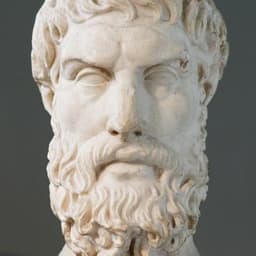
Epicurus
Pleasure is the absence of pain. The good life is quiet, shared, and free from fear.

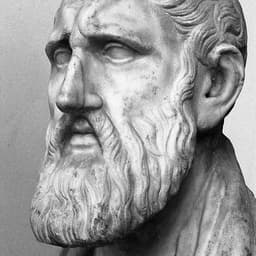
Zeno of Citium
He lost everything in a shipwreck and found philosophy. Then he built Stoicism.
“Tranquil Pleasure (Ataraxia) vs. Stoic Duty (Logos): How to achieve tranquility in an uncertain world?”
In the tumultuous wake of Alexander the Great's empire, Epicurus and Zeno of Citium offered competing philosophies for inner peace. In his secluded Garden, Epicurus taught that the highest good is ataraxia (freedom from mental anxiety) achieved through simple living, genuine friendship, and the removal of superstitious fear of death and gods. Across the city at the Stoa Poikile, Zeno countered that virtue, not pleasure, is the sole good. We must actively fulfill our civic duty and live in harmony with the divine rational order of the universe (Logos).
Head-to-Head Stance Matrix
How both philosophers answered history's most critical questions.
The Highest Good (Summum Bonum)
“What should be our primary goal in life?”
Ataraxia & Aponia: Absence of mental anxiety and bodily pain. True pleasure is tranquility and modest satisfaction, not indulgence.
Virtue (Arete): Living in agreement with Nature and Logos. Pleasure is an incidental byproduct, never the goal.
Civic Life & Politics
“Should the wise person engage in politics?”
Lathe biosas (Live unnoticed): Political ambition brings anxiety, rivalry, and danger. Cultivate private gardens of friendship instead.
Cosmopolitan Duty: We are citizens of the world (cosmopolites). We owe active service to our fellow humans and community.
In Their Own Words
“Death is nothing to us. When we exist, death is not; and when death exists, we are not.”
— Letter to Menoeceus
“Happiness is a good flow of life.”
— Stobaeus, Eclogues
How Did They Meet or React?
Both founded their schools in Athens around 300 BCE within walking distance of each other. Their rivalry was fierce: Stoics accused Epicureans of cowardice and hedonistic retreat from public life; Epicureans mocked Stoics for their rigid emotional austerity and metaphysical dogmas.
Where Do They Agree?
Both schools sought freedom from suffering, shared a therapeutic view of philosophy as medicine for the soul, and rejected material luxury.
Network Connections in the Atlas
SHARED CONCEPTS & IDEAS
Where to Start Reading
Epicurus
Letter to Menoeceus (Menoeceus'a Mektup)
A short, radiant summary of Epicurean ethics and overcoming fear.
Zeno of Citium
The Fragments of Zeno (Zenon'un Fragmanları)
Foundational passages on living according to nature and the cosmopolitan city.
Frequently Asked Questions
No, that is a Roman slander. Epicurus lived on bread, water, and occasional cheese, warning that overindulgence causes intense hangover and pain, defeating the goal of tranquility.
Curated Head-to-Head Debates
Explore humanity's greatest intellectual clashes with structured 4-pillar analysis and quote duels.


Plato vs. Aristotle
Ideal Forms vs. Empirical Realism: Is truth transcendent or immanent in the physical world?

Kant vs. Nietzsche
Universal Moral Duty vs. The Will to Power: Is morality an objective law or a creative act of will?

Descartes vs. Hume
Rational Cogito vs. Radical Skeptical Empiricism: Can pure reason prove reality without sensory doubt?


Seneca vs. Epictetus
The Imperial Statesman vs. The Freed Slave: How do wealth and servitude test Stoic equanimity?


Hobbes vs. Locke
The Leviathan Order vs. Natural Rights: Is human nature brutal or inherently cooperative?


Laozi vs. Confucius
Spontaneous Nature (Dao) vs. Social Ritual (Li): Should we flow with water or cultivate moral discipline?


Heraclitus vs. Parmenides
Eternal Flux vs. Changeless Being: Does everything change, or is change an illusion?


Spinoza vs. Leibniz
Pantheist Necessity vs. The Monadology: Is the universe one deterministic Substance, or an infinity of harmonized monads?


Camus vs. Sartre
The Absurd Rebel vs. Radical Freedom & Revolutionary Politics: How to live without God in an indifferent universe?

Kierkegaard vs. Nietzsche
The Knight of Faith vs. The Antichrist: Should we leap into the divine or overcome God?

Schopenhauer vs. Nietzsche
Cosmic Pessimism vs. Dionysian Affirmation: Should we renounce the Will to Live or embrace it completely?

Marcus Aurelius vs. Seneca
Emperor on Campaign vs. Senator of Rome: The supreme ruler burdened by empire vs. the master of literary counsel.


Socrates vs. Protagoras
Objective Truth vs. Relativism: Is truth discovered through dialectic, or is man the measure of all things?


Rousseau vs. Voltaire
The Noble Savage & General Will vs. Enlightenment Progress & Rational Wit.

Diogenes vs. Plato
Radical Cynic Street Action vs. The Intellectual Academy: Is philosophy lived in a tub or contemplated in abstract forms?


Wittgenstein vs. Russell
The Limits of Language & Mystical Silence vs. Logical Atomism & Scientific Rationalism.


Zhuangzi vs. Xunzi
Wild Spontaneity & Butterfly Dreams vs. Human Nature is Evil & Needs Cultivation.