
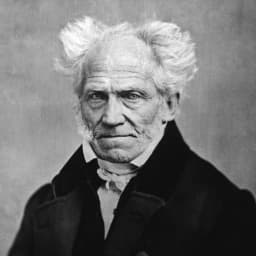
Arthur Schopenhauer
Behind every striving thing (leaf, stone, human) he found one thing: blind, directionless will, knowing neither rest nor satisfaction.

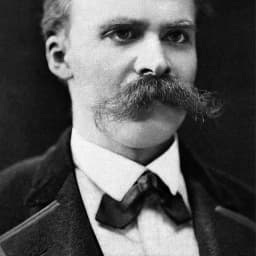
Friedrich Nietzsche
He announced that God was dead and no one had yet understood what that meant. He was right on both counts.
“Cosmic Pessimism vs. Dionysian Affirmation: Should we renounce the Will to Live or embrace it completely?”
Arthur Schopenhauer saw existence as an unending cycle of suffering driven by a blind, irrational 'Will to Live.' To escape this torment, he advocated ascetic detachment, sympathy, and Buddhist-inspired renunciation of desire. As a young student, Nietzsche idolized Schopenhauer as his educator. But as Nietzsche matured, he realized that Schopenhauer's pessimism was life-denying nihilism. Nietzsche flipped Schopenhauer on his head: the Will is not merely to survive, but the Will to Power—and true greatness requires affirming life with all its agony.
Head-to-Head Stance Matrix
How both philosophers answered history's most critical questions.
Suffering and Desire
“What should we do with human desire?”
Renunciation of the Will: Desire is the cause of all torment. Extinguish the Will through asceticism, compassion, and artistic contemplation.
Amor Fati & Affirmation: Suffering is the essential price of greatness. Do not seek peace; seek strength to overcome resistance and celebrate struggle.
In Their Own Words
“Life swings like a pendulum backward and forward between pain and boredom.”
— The World as Will and Representation
“What does not kill me makes me stronger.”
— Twilight of the Idols
How Did They Meet or React?
Nietzsche discovered Schopenhauer's The World as Will and Representation in a Leipzig secondhand bookshop in 1865, calling it a lightning bolt that changed his life. In 1874 he wrote 'Schopenhauer as Educator', only to spend the 1880s ruthlessly dismantling his former master's doctrine of pity and asceticism.
Where Do They Agree?
Both rejected Enlightenment rationalism, placed the non-rational Will at the foundation of human action, and recognized the supreme spiritual power of art and music (especially Wagner).
Network Connections in the Atlas
Arthur Schopenhauer → early inspiration, then rejection → Friedrich Nietzsche — At twenty, Nietzsche read Schopenhauer and recognized a mirror for his own temperament. He spent the next decade moving away: replacing pessimism with affirmation, will-to-denial with will-to-power.
Where to Start Reading
Arthur Schopenhauer
The World as Will and Representation (İrade ve Tasarım Olarak Dünya)
Book IV examines the suffering of existence and the path to renunciation.
Friedrich Nietzsche
The Birth of Tragedy (Tragedyanın Doğuşu)
Nietzsche's debut work exploring Apollonian order and Dionysian intoxication.
Frequently Asked Questions
Nietzsche realized that Schopenhauer's pity and resignation were disguised forms of nihilism that weakened the human spirit instead of empowering it to achieve greatness.
Curated Head-to-Head Debates
Explore humanity's greatest intellectual clashes with structured 4-pillar analysis and quote duels.


Plato vs. Aristotle
Ideal Forms vs. Empirical Realism: Is truth transcendent or immanent in the physical world?

Kant vs. Nietzsche
Universal Moral Duty vs. The Will to Power: Is morality an objective law or a creative act of will?


Descartes vs. Hume
Rational Cogito vs. Radical Skeptical Empiricism: Can pure reason prove reality without sensory doubt?


Seneca vs. Epictetus
The Imperial Statesman vs. The Freed Slave: How do wealth and servitude test Stoic equanimity?


Hobbes vs. Locke
The Leviathan Order vs. Natural Rights: Is human nature brutal or inherently cooperative?


Laozi vs. Confucius
Spontaneous Nature (Dao) vs. Social Ritual (Li): Should we flow with water or cultivate moral discipline?


Heraclitus vs. Parmenides
Eternal Flux vs. Changeless Being: Does everything change, or is change an illusion?


Epicurus vs. Zeno of Citium
Tranquil Pleasure (Ataraxia) vs. Stoic Duty (Logos): How to achieve tranquility in an uncertain world?


Spinoza vs. Leibniz
Pantheist Necessity vs. The Monadology: Is the universe one deterministic Substance, or an infinity of harmonized monads?


Camus vs. Sartre
The Absurd Rebel vs. Radical Freedom & Revolutionary Politics: How to live without God in an indifferent universe?

Kierkegaard vs. Nietzsche
The Knight of Faith vs. The Antichrist: Should we leap into the divine or overcome God?

Marcus Aurelius vs. Seneca
Emperor on Campaign vs. Senator of Rome: The supreme ruler burdened by empire vs. the master of literary counsel.


Socrates vs. Protagoras
Objective Truth vs. Relativism: Is truth discovered through dialectic, or is man the measure of all things?


Rousseau vs. Voltaire
The Noble Savage & General Will vs. Enlightenment Progress & Rational Wit.

Diogenes vs. Plato
Radical Cynic Street Action vs. The Intellectual Academy: Is philosophy lived in a tub or contemplated in abstract forms?


Wittgenstein vs. Russell
The Limits of Language & Mystical Silence vs. Logical Atomism & Scientific Rationalism.


Zhuangzi vs. Xunzi
Wild Spontaneity & Butterfly Dreams vs. Human Nature is Evil & Needs Cultivation.