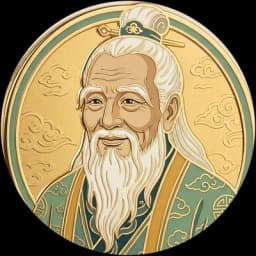
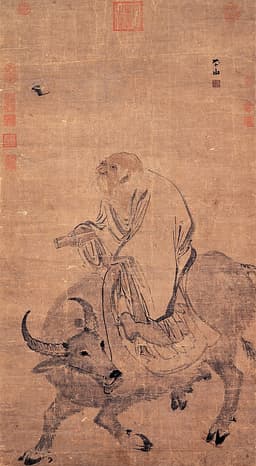
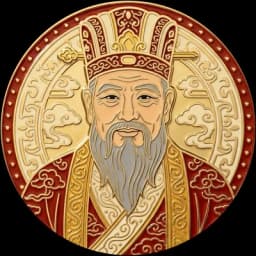
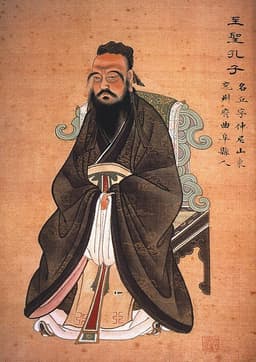
“Spontaneous Nature (Dao) vs. Social Ritual (Li): Should we flow with water or cultivate moral discipline?”
The twin pillars of Chinese civilization, Laozi and Confucius, offered opposite medicines for a society torn apart by war and decay during the Spring and Autumn period. Confucius looked at societal disorder and prescribed moral cultivation: reviving ancestral rituals (Li), filial piety (Xiao), and personal virtue (Ren) through education and governance. Laozi warned that rules, rituals, and moral preachings are the very cause of corruption. True harmony is found by unlearning societal dogmas and living in effortless action (Wu-wei), flowing like water in alignment with the nameless Dao.
Head-to-Head Stance Matrix
How both philosophers answered history's most critical questions.
Action & Effort (Wu-Wei vs Li)
“How should a person navigate daily life?”
Wu-Wei (Effortless Action): Act without contrivance. Do not force, strive, or manufacture virtue. Be like water, yielding yet eroding mountains.
Cultivation through Ritual (Li): Shape the raw character like a precious jade stone through constant practice, manners, and study.
Governance & Politics
“What makes a ruler truly great?”
Invisible Leadership: The best leader is one whose people barely know he exists. When their task is done, they say: 'We did it ourselves.'
Moral Exemplar: The ruler is the wind; the common people are the grass. When the moral wind blows, the grass naturally bends.
Knowledge & Wisdom
“What is true wisdom?”
Unlearning: In the pursuit of learning, every day something is acquired. In the pursuit of Dao, every day something is dropped.
Lifelong Study: Loving benevolence without loving study leads to foolish simplicity. Knowledge of antiquity illuminates present duty.
Society vs Nature
“Where does human fulfillment lie?”
Return to Nature (Pu): Societal civilization corrupts our original uncarved simplicity (Pu). Return to pristine harmony with the cosmos.
Human Community: We cannot live among birds and beasts. Our sacred duty is to heal the human family, community, and realm.
In Their Own Words
“Those who know do not speak. Those who speak do not know.”
— Dao De Jing
“Real knowledge is to know the extent of one's ignorance.”
— Analects (Konuşmalar)
How Did They Meet or React?
According to the Records of the Grand Historian (Shiji), Confucius traveled to Luoyang to consult Laozi on ancient funeral rites. Confucius returned stunned and told his disciples: 'I know how birds fly, how fish swim, and how animals run... but as for the dragon riding the wind and clouds into heaven, I do not understand. Today I have seen Laozi, and he is like a dragon!'
Where Do They Agree?
Both thinkers rejected violent conquest and militarism, sought to restore peace and order to humanity, and revered the Dao (the Way), though they defined its expression in contrasting terms.
Where to Start Reading
Laozi
Dao De Jing (Tao Te Ching)
Chapters 1, 8, and 11 illuminate the mystery of the Dao and the quality of water.
Confucius
The Analects (Konuşmalar)
Book II focuses on governance by virtue and filial devotion.
Frequently Asked Questions
Historians debate whether Laozi was a single historical archivist named Li Er or a composite figure representing an ancient oral tradition of Daoist masters, while Confucius is an indisputable historical figure.
Curated Head-to-Head Debates
Explore humanity's greatest intellectual clashes with structured 4-pillar analysis and quote duels.


Plato vs. Aristotle
Ideal Forms vs. Empirical Realism: Is truth transcendent or immanent in the physical world?

Kant vs. Nietzsche
Universal Moral Duty vs. The Will to Power: Is morality an objective law or a creative act of will?


Descartes vs. Hume
Rational Cogito vs. Radical Skeptical Empiricism: Can pure reason prove reality without sensory doubt?


Seneca vs. Epictetus
The Imperial Statesman vs. The Freed Slave: How do wealth and servitude test Stoic equanimity?


Hobbes vs. Locke
The Leviathan Order vs. Natural Rights: Is human nature brutal or inherently cooperative?


Heraclitus vs. Parmenides
Eternal Flux vs. Changeless Being: Does everything change, or is change an illusion?


Epicurus vs. Zeno of Citium
Tranquil Pleasure (Ataraxia) vs. Stoic Duty (Logos): How to achieve tranquility in an uncertain world?


Spinoza vs. Leibniz
Pantheist Necessity vs. The Monadology: Is the universe one deterministic Substance, or an infinity of harmonized monads?


Camus vs. Sartre
The Absurd Rebel vs. Radical Freedom & Revolutionary Politics: How to live without God in an indifferent universe?

Kierkegaard vs. Nietzsche
The Knight of Faith vs. The Antichrist: Should we leap into the divine or overcome God?

Schopenhauer vs. Nietzsche
Cosmic Pessimism vs. Dionysian Affirmation: Should we renounce the Will to Live or embrace it completely?

Marcus Aurelius vs. Seneca
Emperor on Campaign vs. Senator of Rome: The supreme ruler burdened by empire vs. the master of literary counsel.


Socrates vs. Protagoras
Objective Truth vs. Relativism: Is truth discovered through dialectic, or is man the measure of all things?


Rousseau vs. Voltaire
The Noble Savage & General Will vs. Enlightenment Progress & Rational Wit.

Diogenes vs. Plato
Radical Cynic Street Action vs. The Intellectual Academy: Is philosophy lived in a tub or contemplated in abstract forms?


Wittgenstein vs. Russell
The Limits of Language & Mystical Silence vs. Logical Atomism & Scientific Rationalism.


Zhuangzi vs. Xunzi
Wild Spontaneity & Butterfly Dreams vs. Human Nature is Evil & Needs Cultivation.