“The Imperial Statesman vs. The Freed Slave: How do wealth and servitude test Stoic equanimity?”
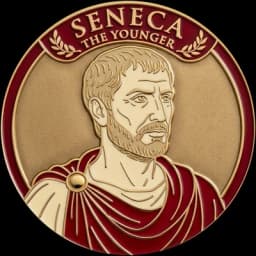
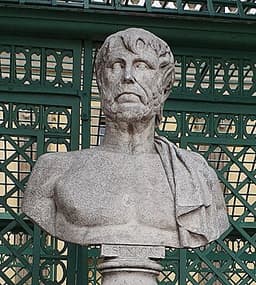
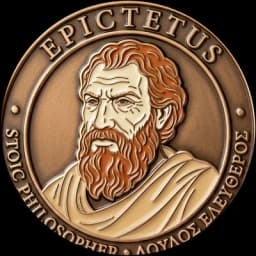
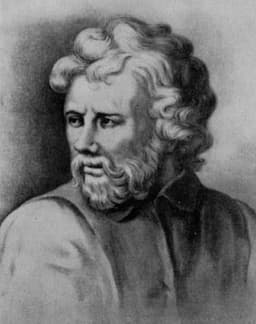
Stoicism is often presented as a unified philosophy, but the lives of Seneca and Epictetus reveal two dramatically contrasting paths to inner tranquility. Seneca was an ultra-wealthy senator, playwright, and imperial advisor to Nero who negotiated the treacherous corridors of political power and justified his vast fortunes as 'preferred indifferents.' Epictetus was born a slave with a crippled leg who taught in utter poverty and reduced Stoicism to a razor-sharp psychological dichotomy: what is up to us, and what is not up to us.
Head-to-Head Stance Matrix
How both philosophers answered history's most critical questions.
Wealth & Possessions
“How should a Stoic treat material riches?”
Preferred Indifferent: Money does not make one better, but it provides a wider stage on which to practice virtue, provided one is ready to lose it instantly.
Ascetic Indifference: Possessions are chains. The fewer things you cling to, the fewer weapons fate has against your inner peace.
The Sphere of Control
“Where should our mental energy be focused?”
Pragmatic Engagement: We must manage our public duty, diplomacy, and estate while internally cultivating calm and preparing for misfortune.
The Dichotomy of Control: Focus exclusively on what is in your power (beliefs, desires, choices). Treat everything else with complete indifference.
Writing Style & Approach
“How should philosophy be communicated?”
Literary Epistles: Polished, metaphorical, psychological letters written with warmth and classical rhetorical eloquence.
Direct Socratic Lecture: Blunt, provocative, spoken diatribes that interrogate students and expose self-deception without flattery.
Attitude toward Fate (Amor Fati)
“When is life no longer worth living?”
The Open Door: Suicide is the ultimate guarantee of freedom. When tyrannical power destroys your honor, leave calmly through the door.
Playing Your Assigned Role: You are an actor in a drama written by the Divine. Your duty is to play your assigned part nobly until the play ends.
In Their Own Words
“We suffer more often in imagination than in reality.”
— Letters from a Stoic
“Men are disturbed not by things, but by the view which they take of them.”
— Enchiridion
How Did They Meet or React?
Though both operated under the Roman Empire, Seneca died by forced suicide under Nero in 65 CE, while Epictetus was exiled from Rome under Emperor Domitian in 89 CE to Nicopolis in Greece. Epictetus never mentions Seneca by name in his Discourses, focusing instead on Socrates and Diogenes, yet both shaped the definitive Roman school of late Stoicism.
Where Do They Agree?
Both insist that external events cannot harm the soul—only our judgments about them do. Both practiced daily contemplation of death (memento mori) and viewed virtue as the sole true good.
Network Connections in the Atlas
SHARED CONCEPTS & IDEAS
SHARED PLACES
Where to Start Reading
Seneca
Letters from a Stoic (Ahlak Mektupları)
Start with Letters 1, 9, and 13 on time, friendship, and groundless fears.
Epictetus
Enchiridion (Kılavuz Kitap)
Chapter 1 lays out the foundational Dichotomy of Control in two paragraphs.
Frequently Asked Questions
Critics in Rome made that charge. Seneca responded that a wise person does not love wealth, but prefers to have it rather than lack it, maintaining that money must serve the philosopher, not rule him.
Curated Head-to-Head Debates
Explore humanity's greatest intellectual clashes with structured 4-pillar analysis and quote duels.


Plato vs. Aristotle
Ideal Forms vs. Empirical Realism: Is truth transcendent or immanent in the physical world?


Kant vs. Nietzsche
Universal Moral Duty vs. The Will to Power: Is morality an objective law or a creative act of will?

Descartes vs. Hume
Rational Cogito vs. Radical Skeptical Empiricism: Can pure reason prove reality without sensory doubt?


Hobbes vs. Locke
The Leviathan Order vs. Natural Rights: Is human nature brutal or inherently cooperative?


Laozi vs. Confucius
Spontaneous Nature (Dao) vs. Social Ritual (Li): Should we flow with water or cultivate moral discipline?


Heraclitus vs. Parmenides
Eternal Flux vs. Changeless Being: Does everything change, or is change an illusion?


Epicurus vs. Zeno of Citium
Tranquil Pleasure (Ataraxia) vs. Stoic Duty (Logos): How to achieve tranquility in an uncertain world?


Spinoza vs. Leibniz
Pantheist Necessity vs. The Monadology: Is the universe one deterministic Substance, or an infinity of harmonized monads?


Camus vs. Sartre
The Absurd Rebel vs. Radical Freedom & Revolutionary Politics: How to live without God in an indifferent universe?

Kierkegaard vs. Nietzsche
The Knight of Faith vs. The Antichrist: Should we leap into the divine or overcome God?

Schopenhauer vs. Nietzsche
Cosmic Pessimism vs. Dionysian Affirmation: Should we renounce the Will to Live or embrace it completely?


Marcus Aurelius vs. Seneca
Emperor on Campaign vs. Senator of Rome: The supreme ruler burdened by empire vs. the master of literary counsel.


Socrates vs. Protagoras
Objective Truth vs. Relativism: Is truth discovered through dialectic, or is man the measure of all things?


Rousseau vs. Voltaire
The Noble Savage & General Will vs. Enlightenment Progress & Rational Wit.

Diogenes vs. Plato
Radical Cynic Street Action vs. The Intellectual Academy: Is philosophy lived in a tub or contemplated in abstract forms?


Wittgenstein vs. Russell
The Limits of Language & Mystical Silence vs. Logical Atomism & Scientific Rationalism.


Zhuangzi vs. Xunzi
Wild Spontaneity & Butterfly Dreams vs. Human Nature is Evil & Needs Cultivation.